
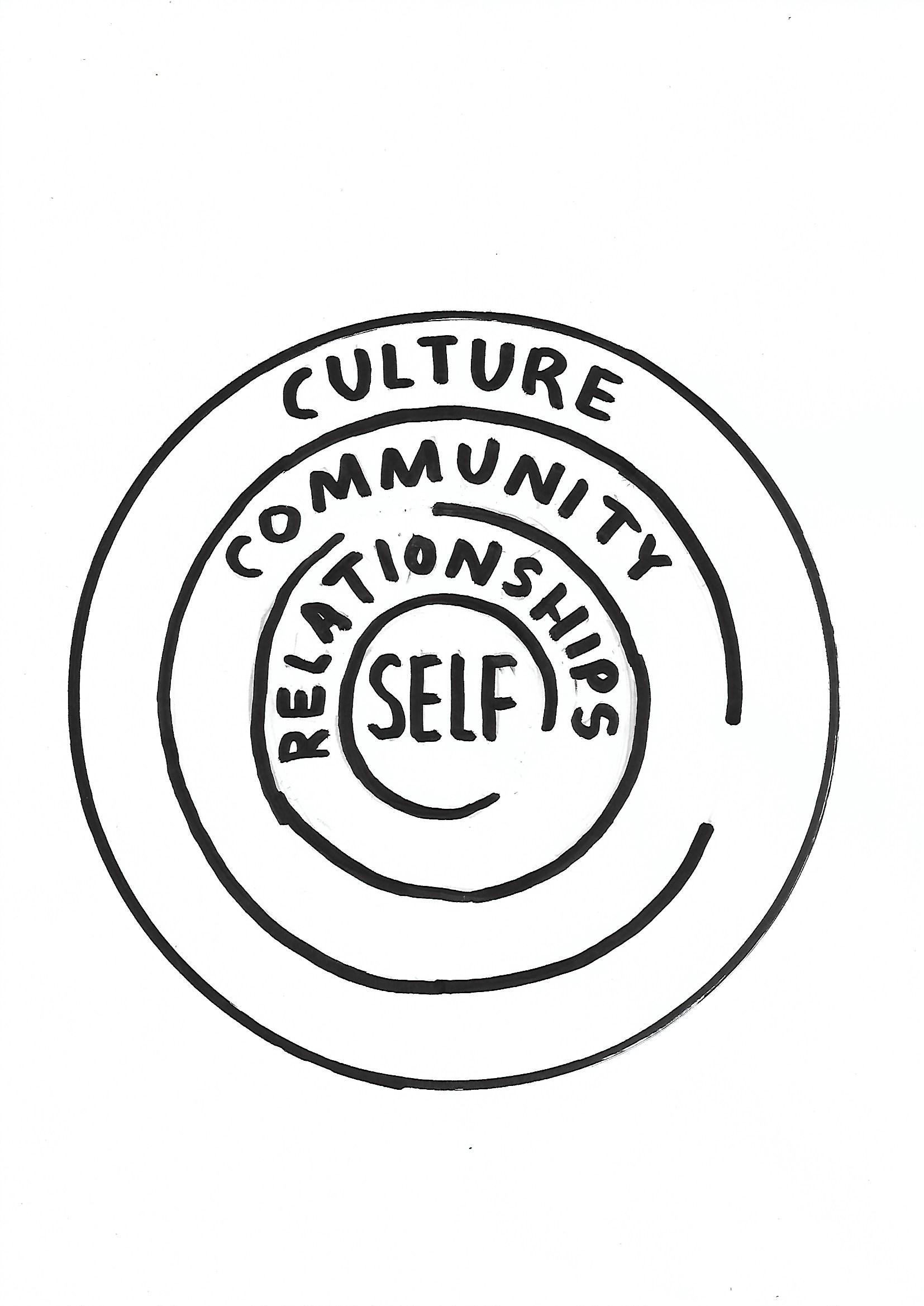
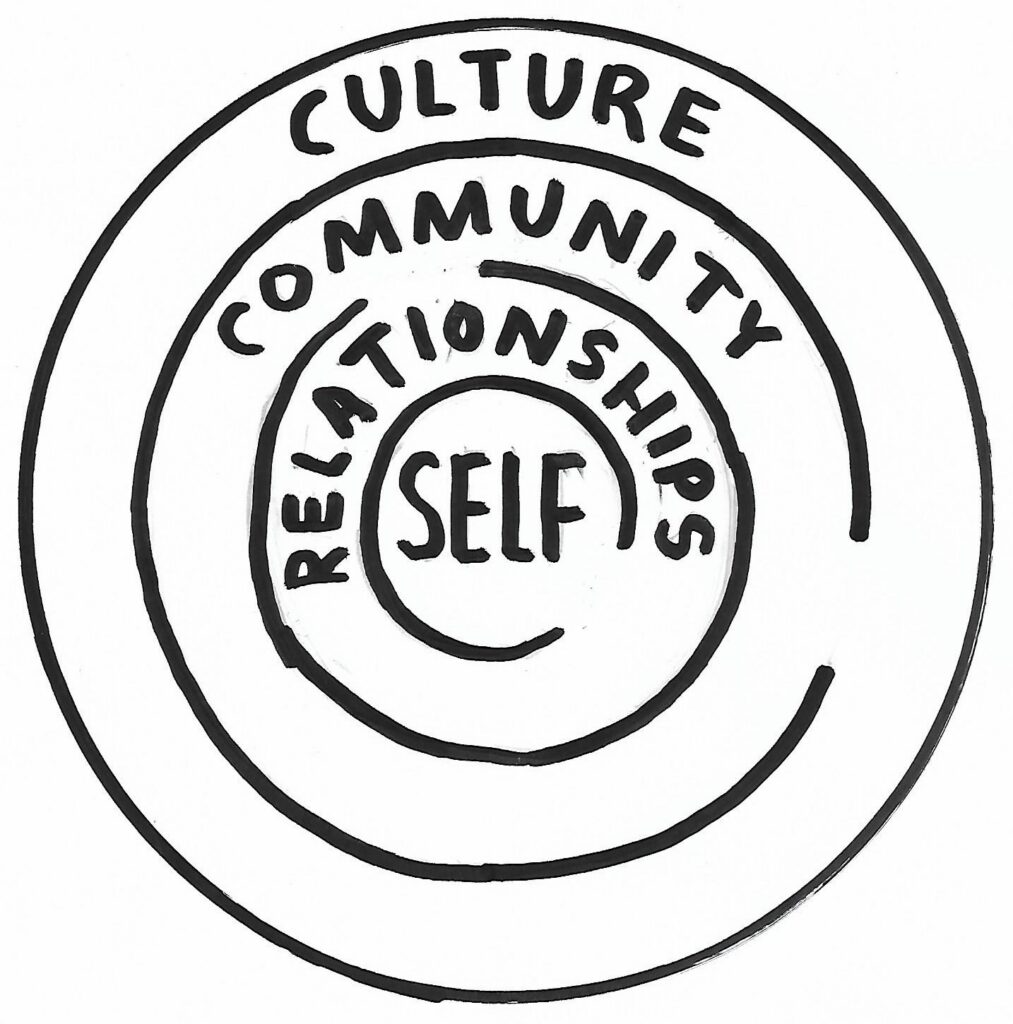
Relational aspect of choice
Much of what happens in the therapy room is, in one way or another, about agency. People arrive because a choice feels closed to them, or because they made a choice once and have been living inside its consequences ever since, unsure whether it was really theirs to make. A great deal of the work is about helping someone locate their own wants, needs and voice, often for the first time, and trust them enough to act.
But agency, looked at systemically, is a more complicated idea than “know what you want and go and get it.” None of us choose from nowhere. We choose from inside families, histories, cultures and communities that shaped the very desires we’re now trying to honour. A systemic view doesn’t undo agency. It relocates it — from something purely internal, into something relational. And that relocation matters, because a feeling of connectedness, of mattering to others and belonging somewhere, is not a constraint on wellbeing. It is one of its conditions.
Look Closely: Takkuuk
I found myself thinking about this again after encountering Takkuuk, an immersive installation by BICEP, visual artist Zak Norman and filmmaker Charlie Miller, built around interviews with young Indigenous Arctic artists reimagining throat-song, rap and electronic production as living extensions of their cultures rather than departures from them. What struck me wasn’t the innovation itself, bold as it is. It was how little it read as an individual assertion. These are artists speaking about honouring the past while carrying it somewhere new — innovation as an act of belonging, not separation.
This is close to what systemic thinking has long argued: that the self doesn’t stand outside the system it comes from, choosing freely from some neutral vantage point, but is always already in relationship with it — shaped by it, answerable to it, drawing strength from it even in its most original acts. Agency, in this view, isn’t diminished by belonging. It’s partly made of it.
Two Kinds of Freedom
None of this collapses the personal into the collective. Some decisions are, and should remain, one’s own — who to love, what to believe, when to leave, when to stay. Systemic thinking doesn’t ask us to hand these over to the group. It asks us to notice the difference between two kinds of freedom: acting as though no one else exists and acting fully as oneself while still held by something larger.
In therapy, this often shows up as a false choice: individuate or belong, as if you could only have one. Watching Takkuuk, I was reminded that the more interesting work — for these artists, and for any of us — is finding what can only be discovered in relation to others, and what genuinely needs to be decided alone. Agency, seen systemically, isn’t the opposite of connection. It’s what connection, done well, makes possible.